
WIPHALA is the symbol that represents the union and independence of the peoples of the Andes.
The expression’s origin is in the words of the language Aymara Eiphay. An expression of joy, and phalax, which is the dream produced by flying a flag.
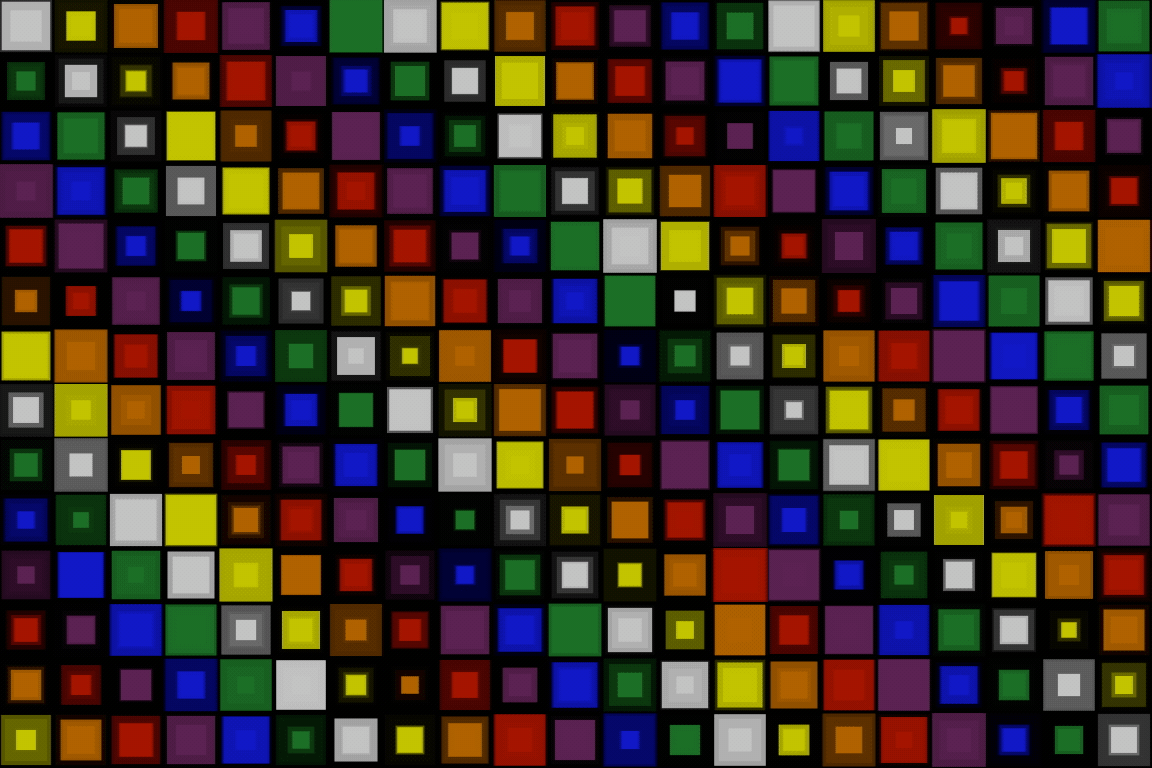
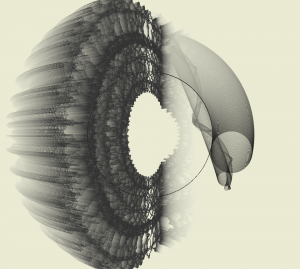
Generative graphics exploration from Wiphala to the Museo de Arte Contemporáneo Plaza – Bolivia. Thoughts about the rights of the Andean peoples.
The colours originate from the rainbow, as a reference to Andean ancestors, to show the composition and structure of the emblems and organise the community and harmonic society of the Andes.
Wiphala is property of the original nations. For the Quíchuas and Aimarás, the Wiphala is the expression of Andean philosophical thought, and its content expresses the development of science, technology and art, it is also the dialectic expression of Pacha-Kama and Pacha-Mama, an image of organisation and harmony of brotherhood and mutuality in the Andes. That is why the Wiphala is sacred, and corresponds to spread and defend the meanings of the problem throughout the Andean area, both in Ecuador, Peru and Bolivia, showing the problems of the world, the territorial, national and cultural identity. Its management and use must be permanent and consistent.
- Red: It stands for the Planet Earth (aka-pacha), it is the expression of Andean man, in the intellectual aspect, it is the cosmic philosophy in the thought and knowledge of the Amawatas.
- Orange: Represents society and culture, that of culture, also expresses the preservation and procreation of the human species, considered the nation’s most appreciated patrimonial wealth, health and medicine, training and education, the cultural practice of the dynamical youth.
- Yellow: Expresses the energy and strength (ch’ama-pacha), it’s the expression of the moral principles of Andean people, it’s the doctrine of Pacha-Kama and Pacha-Mama: Duality (chacha-warmi) are the laws and norms, the collective practice of brotherhood and human solidarity.
- White: it represents time (jaya-pacha), it is the expression of the development and permanent transformation of Quallana Marka on the Andes, and the development of science and technology, and art, and intellectual and manual work that generates reciprocity and harmony within the community structure.
- Green: It represents the Andean economy and production, it is the symbol of natural wealth, of the surface and subsoil, it represents land and territory, and even agricultural production, flora and fauna, hydrological and mineral reserves.
- Blue: represents the cosmic space, the infinite (araxa-pacha), is the expression of the star systems of the universe and the natural effects that are on the earth, is astronomy and physics, socio-economic organization, political and cultural, is the law of gravity, natural dimensions and phenomena.
- Violet: It represents the Andean politics and ideology, it is the expression of community and harmonic power of the Andes, the instrument of the state, as a higher station, which is the structure of power, the organisations, social, economic and cultural and the administration of the people of the country.